Plan around the activity you will do
Hair arrangements that work for a walk may feel awkward during floor exercises, cycling, or a class with repeated movement. Consider where your head will rest, whether you need protective equipment, and how much of the hair must stay away from your face. A bulky clip at the back can press into a mat, while a high arrangement may interfere with a helmet. Choose the position for the activity rather than only the mirror. Comfort and safety during the workout are more useful than a style that stays perfectly unchanged.
Use support without constant pulling
Select a tie or accessory that holds the available hair without requiring a very tight fastening. Test the arrangement by turning your head and making a few of the movements you expect during the session. If it pulls, loosen it or choose another position. Avoid treating discomfort as evidence that the style is secure enough. A loose braid or a lower arrangement may work better for some lengths. Keep short front pieces away from the face with a suitable gentle method rather than repeatedly tightening the main hairstyle to catch every strand.
Prepare the transition before starting
If you will go straight to work or another appointment, decide whether you have time and facilities to wash afterward. Pack the items needed for that actual plan, including a clean towel if appropriate and the accessory for the next style. Do not rely on a complicated refresh that you have never tried in the changing room. Leave enough time for the roots and inner layers to dry if you wash. A realistic transition prevents the final minutes after exercise from becoming a hurried attempt to preserve an unsuitable pre workout hairstyle.
Assess the scalp after exercise
After the session, loosen the arrangement and check how your scalp feels. The amount of sweat, your activity, and your usual washing needs help determine the next step. A refresh product should not automatically replace cleansing when your scalp needs washing. Follow product instructions and avoid adding several layers simply to change the appearance at the roots. If you do wash, focus on a thorough rinse and a manageable drying plan. The aim is a comfortable transition into the rest of the day, not an inflexible rule about protecting yesterday's styling.
Keep the post workout look simple
Choose a next style that works with the hair's current condition. A clear parting, a loose braid, or a comfortable clip can look deliberate without a complete heated session. If the front needs local rearranging, handle that area separately. Allow any damp refresh to dry before using a tool intended for dry hair. Check that the new accessory is not trapping moisture against an uncomfortable area. A modest routine is easier to repeat when exercise becomes a regular part of the week and your plans vary from day to day.
Clean the kit and reassess the fit
Empty the workout pouch after use and separate items that need washing or drying. Remove hair from ties and check clips for damage. Keep clean accessories available for the next session so you do not reuse a damp or tangled item in a rush. Notice whether the arrangement repeatedly slips, pulls, or presses during a particular exercise. Change the placement or accessory based on that observation. The best workout hair routine earns its place by staying comfortable, supporting the activity, and making the transition afterward straightforward.
Choose accessories by comfort and fit
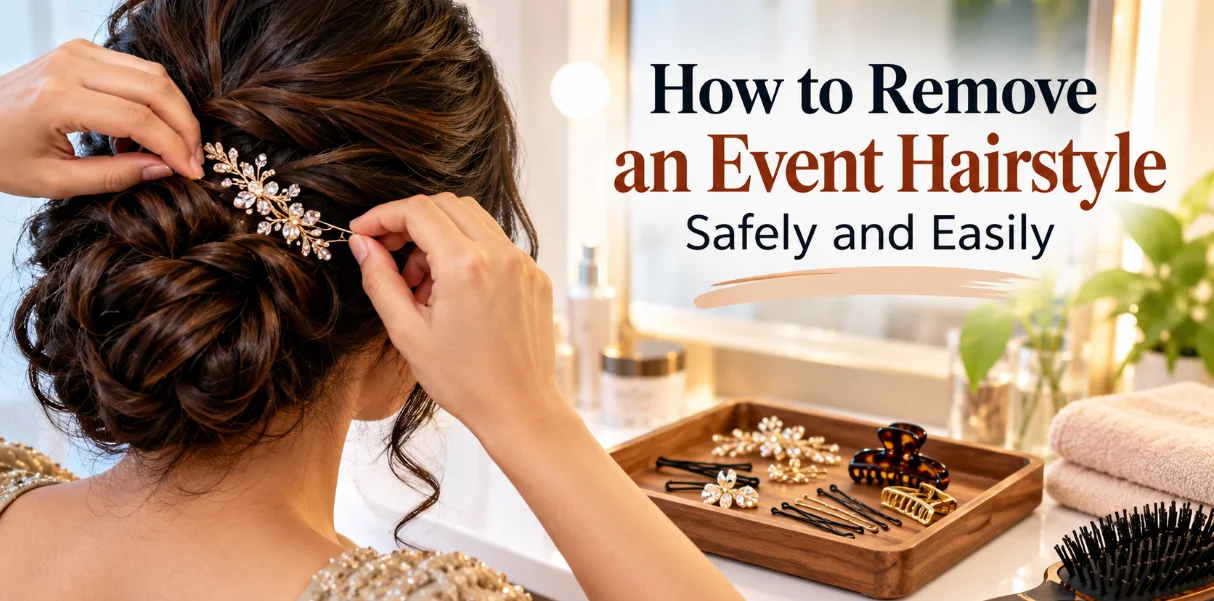
A clip or tie should support your hairstyle without making the scalp feel pulled. Check the edges, hinges, and fastening before placing it in the hair. Smooth surfaces are easier to remove than damaged parts that catch individual strands. Match the accessory to the amount of hair it must hold rather than choosing by appearance alone. If it slips, change its position or choose a better size instead of fastening it with extra tension. Carry one simple alternative when you will be away from home for several hours. The most useful accessory is the one you can insert, wear, and remove comfortably without help.
Start with a practical washing plan
Choose a washing rhythm around the condition of your scalp, your activity, and the products you use. There is no need to copy a fixed timetable from somebody whose hair and routine are different. Work cleanser through the scalp gently, rinse thoroughly, and use conditioner where your lengths need it, following the label. Dry the roots and hidden layers as carefully as the visible surface. A rushed rinse or a damp section at the nape can make later styling feel unnecessarily difficult. If a product repeatedly leaves your hair uncomfortable or coated, simplify the combination rather than adding another layer to disguise the result.
Create a version for busy mornings
Choose one part of the look that makes the biggest difference to you. It might be a neat fringe, an even parting, or controlled ends around the face. Make that your priority when time is short. Arrange the rest with a simple style that you already know how to finish. Keep the necessary tools together so you do not spend the first few minutes looking for clips or attachments. Avoid introducing an unfamiliar method when departure is close. A shortened routine should be a planned option with a clear stopping point, not a hurried attempt to squeeze every step into half the usual time.
Have a calm fallback ready
Choose a second hairstyle that you can complete with the hair in its current condition. For longer lengths, that could be a loose braid or a comfortable clipped arrangement. For shorter lengths, it might be a different parting or a simple tucked section. Practise removing the first style and making the second without aggressive brushing or extra tension. Carry only the accessory needed for that change. Knowing you have a workable fallback makes it easier to stop correcting a style that is not cooperating. It also helps when a journey, an unexpected shower, or a longer than planned day changes your original arrangement.
Use a small refresh instead of a full restart
Look at the hair from the front, sides, and back before deciding what needs attention. Frequently the main shape is still usable and only a parting, a flattened section, or the ends need rearranging. Use your fingers, a suitable brush, or a carefully placed accessory for those areas first. If you use a water based refresh product, allow the hair to dry before applying tools that require dry hair. Avoid coating the whole head to fix one small problem. Stop when the overall result looks balanced. A restrained refresh makes it easier to assess when washing is needed and when yesterday's work can still serve you.
Account for the journey as well as the mirror
Think about what happens between your dressing table and your destination. A walk outside, a crowded journey, a helmet, or an air conditioned office can each change how a style sits. Take a photograph after your normal trip so you can identify the areas that move or flatten. Arrange accessories in positions that remain comfortable during the journey, and follow transport safety requirements. Pack a compact comb and one useful clip rather than a full styling kit. At the destination, give the hair a moment to settle before refreshing it. A practical hairstyle should work during the journey as well as immediately after preparation.
Keep a short record of what works
A useful routine note can be three lines: what you used, how you arranged the hair, and how the result felt later. Include an approximate drying time or product amount if it affected the outcome. Record the conditions when they mattered, such as a humid journey or a day spent mostly indoors. You do not need a complicated tracker or a photograph of every wash. After a few attempts, look for patterns that appear more than once. Keep the choices that consistently help and simplify the steps that do not. This approach turns occasional good results into a method you can repeat with less guesswork.