Look at the scalp and lengths separately
Hair can feel oily close to the scalp while the ends feel rough or difficult to manage. Treating the whole head as one identical surface can make the routine confusing. Observe where the oily appearance begins, which lengths feel dry, and whether the pattern changes after exercise or styling. Think about the products applied to each area. The goal is to choose placement and frequency more carefully, rather than assume you need the strongest cleanser everywhere or the richest conditioner from roots to tips.
Make cleansing thorough rather than aggressive
Work your chosen cleanser gently through the scalp as its instructions direct. Take time to rinse the areas behind the ears and at the nape, where rushed washing can leave residue. Avoid repeatedly scrubbing the lengths because the roots look oily. Decide on washing frequency from your comfort and actual activity rather than a rule that says everybody must wait the same number of days. If the scalp stays uncomfortable despite a straightforward routine, seek appropriate professional advice instead of repeatedly increasing the strength or number of products.
Place conditioner where it helps
Read the label and apply conditioner to the areas for which it is intended. For many everyday routines, the lengths and ends need more attention than the roots. Divide the hair so you can spread the product evenly instead of placing a large amount on the easiest visible section. Rinse according to the instructions and judge the hair after it dries. If the roots become heavy while the ends remain awkward, reconsider placement and amount. More product across the whole head may not solve two different needs.
Check what finishing products leave behind
Serums, creams, sprays, and repeated refresh products can accumulate differently in different areas. Notice whether you keep touching the roots with hands that have product on them, or whether the front receives more layers than the back. Use each product for a defined purpose and avoid automatic top ups throughout the day. A small record of amounts can be useful when the hair alternates between limp roots and coated ends. Before buying a replacement, simplify the combination so you can identify which existing step is creating the unwanted finish.
Choose styles that keep you comfortable
A practical hairstyle can move the front away from the face or make the ends easier to manage, but it should not be used to ignore an uncomfortable scalp. Avoid fastening the hair tightly to disguise oiliness. Choose a loose arrangement that you can remove easily when washing is needed. If the ends tangle, make time for careful detangling rather than repeatedly pulling them into a firmer style. The routine should help you feel comfortable through the day while keeping the different needs of roots and lengths visible.
Review the pattern across several washes
Do not judge a new placement method from one unusual day. Compare a few normal washes, noting activity, product amount, and how the roots and ends feel after drying. Change one variable at a time, such as conditioner placement or the amount of a finishing product. Keep the steps that produce a comfortable result consistently. If you notice persistent irritation or a sudden unexplained change, treat that as a reason for assessment rather than another cosmetic experiment. Care becomes easier when observations lead to a specific adjustment instead of a complete weekly restart.
Start with a practical washing plan
Choose a washing rhythm around the condition of your scalp, your activity, and the products you use. There is no need to copy a fixed timetable from somebody whose hair and routine are different. Work cleanser through the scalp gently, rinse thoroughly, and use conditioner where your lengths need it, following the label. Dry the roots and hidden layers as carefully as the visible surface. A rushed rinse or a damp section at the nape can make later styling feel unnecessarily difficult. If a product repeatedly leaves your hair uncomfortable or coated, simplify the combination rather than adding another layer to disguise the result.
Keep product amounts easy to judge
Using several products at once makes it difficult to identify what actually improves your result. Choose each product for a clear task, such as providing hold or helping you manage the lengths. Follow the stated application method and begin with a small amount that you can distribute evenly. Allow the first application to settle before deciding whether to add more. If the finish feels stiff, greasy, or unexpectedly heavy, record the amount and reduce it next time. A simple routine is easier to repeat because the variables are visible. Labels, measuring pumps, and a short note in your phone are more useful than guessing from memory.
Adapt the method for fine hair
Fine strands and a low density of hair are separate features, although they can occur together. Either can make heavy finishing products more noticeable. Begin with a modest amount, keep it away from the roots when appropriate, and judge the result before adding more. Smaller working sections can improve control without requiring extra force. Aim for movement and a comfortable silhouette instead of pressing every strand completely flat. A fringe, side parting, or softly placed clip can change the outline without another full styling session. If your usual method makes the hair look limp, reduce one product or one step before replacing everything.
Remove knots with a manageable sequence
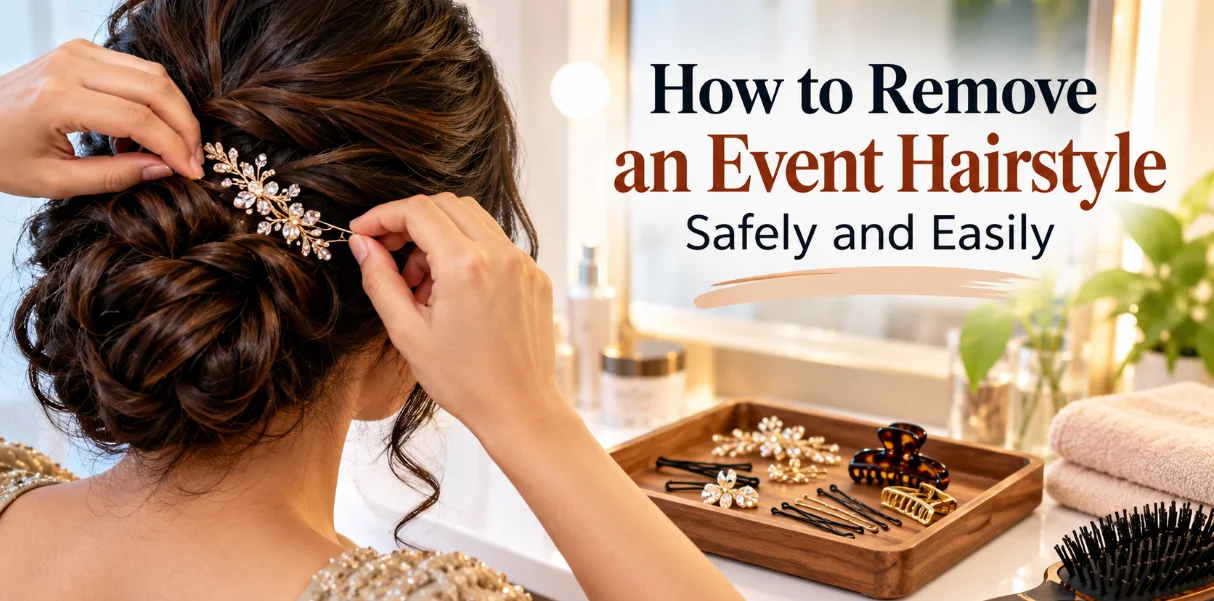
Separate the hair into sections small enough to handle comfortably. Support the section above a knot so the effort does not pull directly on the scalp. Work through the ends first, then move gradually upward as each area becomes easier to comb. Use a comb or brush that suits your texture and follow any product instructions about wet or dry use. If a knot will not loosen, pause and isolate it with your fingers instead of forcing a tool through it. A patient approach is particularly useful after travel, celebrations, or wearing accessories. Finish by checking the nape, where tangles can remain out of sight.
Use a small refresh instead of a full restart
Look at the hair from the front, sides, and back before deciding what needs attention. Frequently the main shape is still usable and only a parting, a flattened section, or the ends need rearranging. Use your fingers, a suitable brush, or a carefully placed accessory for those areas first. If you use a water based refresh product, allow the hair to dry before applying tools that require dry hair. Avoid coating the whole head to fix one small problem. Stop when the overall result looks balanced. A restrained refresh makes it easier to assess when washing is needed and when yesterday's work can still serve you.
Keep a short record of what works
A useful routine note can be three lines: what you used, how you arranged the hair, and how the result felt later. Include an approximate drying time or product amount if it affected the outcome. Record the conditions when they mattered, such as a humid journey or a day spent mostly indoors. You do not need a complicated tracker or a photograph of every wash. After a few attempts, look for patterns that appear more than once. Keep the choices that consistently help and simplify the steps that do not. This approach turns occasional good results into a method you can repeat with less guesswork.
Create a version for busy mornings
Choose one part of the look that makes the biggest difference to you. It might be a neat fringe, an even parting, or controlled ends around the face. Make that your priority when time is short. Arrange the rest with a simple style that you already know how to finish. Keep the necessary tools together so you do not spend the first few minutes looking for clips or attachments. Avoid introducing an unfamiliar method when departure is close. A shortened routine should be a planned option with a clear stopping point, not a hurried attempt to squeeze every step into half the usual time.