Take the style apart in reverse order
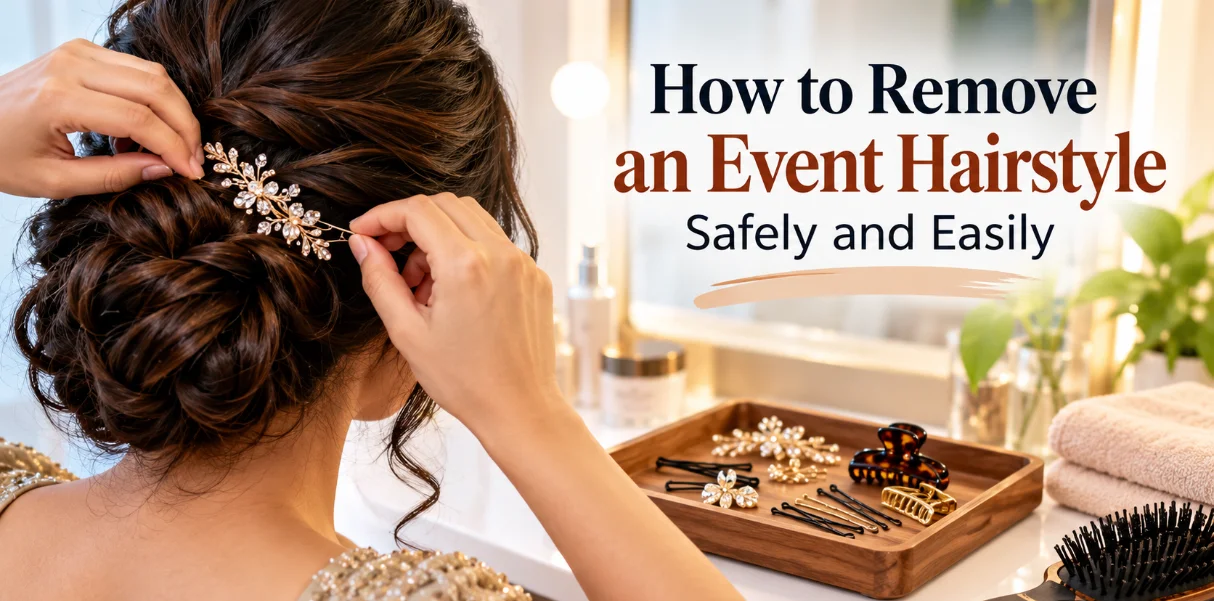
An elaborate hairstyle is easier to undo when you follow the order in which it was built. Remove decorative pieces first, then supporting clips and pins, then the smaller sections beneath them. Work in good light and place each item in a tray rather than dropping it beside the bed. If you know how many pins went in, count them as they come out. Avoid pulling a brush through the whole arrangement while some fasteners are still hidden. A few careful minutes can prevent an ordinary evening routine from becoming a struggle with tangled accessories.
Release the fastening before the hair
Open a clip fully before moving it away. For a pin, follow its direction instead of dragging it sideways through the strands. If jewellery or a decorative comb has caught, isolate the nearby hair with your fingers and loosen it gradually. Ask for help if the back is difficult to see. Cutting hair should not be the first response to a fastening that has become tangled. Stop pulling, make the problem visible, and work on the small caught area while supporting the surrounding section so the scalp is not taking the tension.
Assess the product before reaching for a brush
A style with strong hold may feel firm or coated even after the accessories are gone. Check your styling products' instructions for removal rather than trying to brush the stiffness away with force. The hair may need washing and conditioning before a comfortable detangling step. If only the outer surface has a small amount of product, a gentler local approach may be enough. Let the condition of the hair guide you. An important part of finishing an event style is accepting that different products require different removal methods.
Separate a large tangle into smaller tasks
Find where the tangle begins and isolate that zone from the hair around it. Support the section above the knot and work at the loose ends with your fingers or an appropriate tool. Do not keep pulling the same blocked path. A little patience is especially useful at the nape, where movement, clothing, and jewellery may have brought several sections together. If your arms are tired, take a break before continuing. Working carefully for a little longer is more practical than escalating force because the evening has already been long.
Clean the accessories before storing them
Check each accessory for loose hair, product residue, bent parts, or damaged surfaces. Follow its care instructions and let it dry if cleaning involved water. Separate pieces that need repair from those ready for reuse. Decorative pins are easier to manage when the working set remains together, particularly if a stylist may use them at the next event. Store sharp points securely and keep them away from children. A clean, complete set saves time later and prevents you from discovering a damaged clip halfway through the next hairstyle.
Make the next morning deliberately simple
After removing a complex style, choose an easy plan for the following day. If washing is needed, leave enough time to complete it without another elaborate finish. If the hair is comfortable and manageable, a loose arrangement may be sufficient overnight and a small refresh may be enough in the morning. Notice whether a particular part of the event style caused repeated pulling or tangling. Mention that to your stylist next time. Recovery is useful feedback: the best celebration hairstyle should be comfortable to wear and reasonably straightforward to remove.
Remove knots with a manageable sequence
Separate the hair into sections small enough to handle comfortably. Support the section above a knot so the effort does not pull directly on the scalp. Work through the ends first, then move gradually upward as each area becomes easier to comb. Use a comb or brush that suits your texture and follow any product instructions about wet or dry use. If a knot will not loosen, pause and isolate it with your fingers instead of forcing a tool through it. A patient approach is particularly useful after travel, celebrations, or wearing accessories. Finish by checking the nape, where tangles can remain out of sight.
Start with a practical washing plan
Choose a washing rhythm around the condition of your scalp, your activity, and the products you use. There is no need to copy a fixed timetable from somebody whose hair and routine are different. Work cleanser through the scalp gently, rinse thoroughly, and use conditioner where your lengths need it, following the label. Dry the roots and hidden layers as carefully as the visible surface. A rushed rinse or a damp section at the nape can make later styling feel unnecessarily difficult. If a product repeatedly leaves your hair uncomfortable or coated, simplify the combination rather than adding another layer to disguise the result.
Plan the transition to the next morning
Remove clips, pins, and firm accessories before bed, and check that none are hidden beneath the hair. Choose a loose arrangement that feels comfortable while you turn your head on the pillow. Do not tighten a tie simply to keep every strand in place overnight. If your preferred pillowcase or wrap reduces snagging for you, include it in the routine, but keep expectations realistic. The next morning, allow the hair to fall naturally before deciding what needs adjusting. Sometimes a flattened section changes shape after a few minutes. A small amount of patience can prevent unnecessary brushing and another round of styling.
Choose accessories by comfort and fit
A clip or tie should support your hairstyle without making the scalp feel pulled. Check the edges, hinges, and fastening before placing it in the hair. Smooth surfaces are easier to remove than damaged parts that catch individual strands. Match the accessory to the amount of hair it must hold rather than choosing by appearance alone. If it slips, change its position or choose a better size instead of fastening it with extra tension. Carry one simple alternative when you will be away from home for several hours. The most useful accessory is the one you can insert, wear, and remove comfortably without help.
Keep the tools ready for the next use
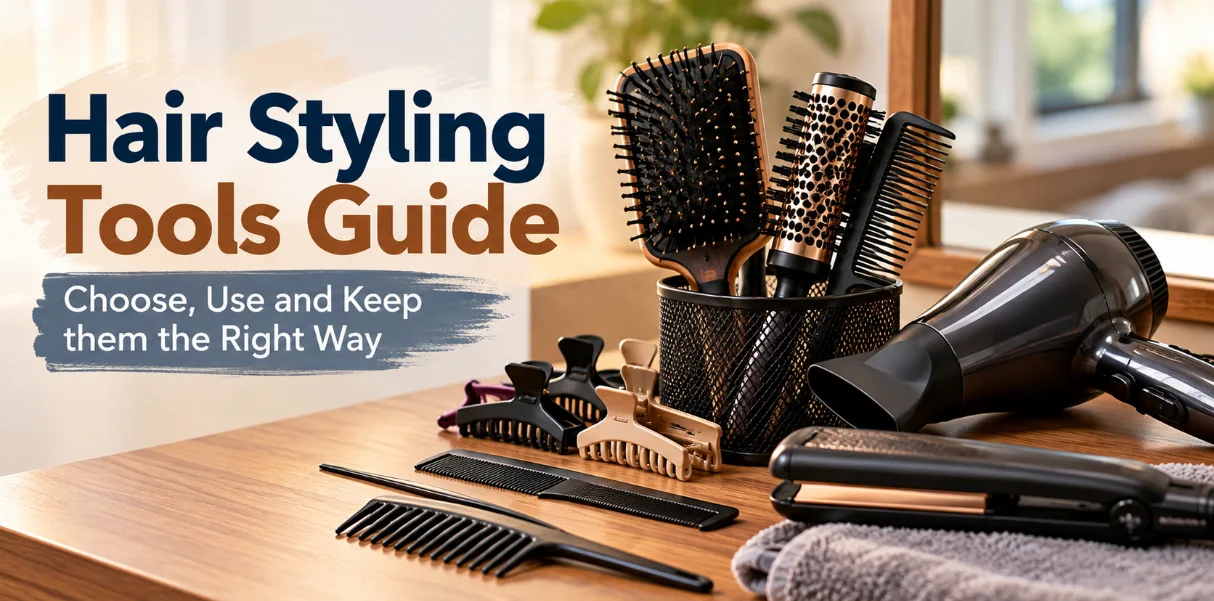
Switch electrical tools off, unplug them, and allow them to cool before cleaning or storage. Follow the manufacturer's instructions for plates, barrels, removable filters, and attachments; different finishes may need different care. Do not immerse an electrical tool or spray liquid into its body. Remove loose hair from brushes and inspect clips for rough edges. Keep cords loosely arranged so they are not trapped under heavy items or sharply bent at the connection. If a tool develops a damaged cord, unusual smell, or unreliable operation, stop using it and seek appropriate service. A brief check while putting things away prevents a rushed discovery later.
Have a calm fallback ready
Choose a second hairstyle that you can complete with the hair in its current condition. For longer lengths, that could be a loose braid or a comfortable clipped arrangement. For shorter lengths, it might be a different parting or a simple tucked section. Practise removing the first style and making the second without aggressive brushing or extra tension. Carry only the accessory needed for that change. Knowing you have a workable fallback makes it easier to stop correcting a style that is not cooperating. It also helps when a journey, an unexpected shower, or a longer than planned day changes your original arrangement.
Keep a short record of what works
A useful routine note can be three lines: what you used, how you arranged the hair, and how the result felt later. Include an approximate drying time or product amount if it affected the outcome. Record the conditions when they mattered, such as a humid journey or a day spent mostly indoors. You do not need a complicated tracker or a photograph of every wash. After a few attempts, look for patterns that appear more than once. Keep the choices that consistently help and simplify the steps that do not. This approach turns occasional good results into a method you can repeat with less guesswork.