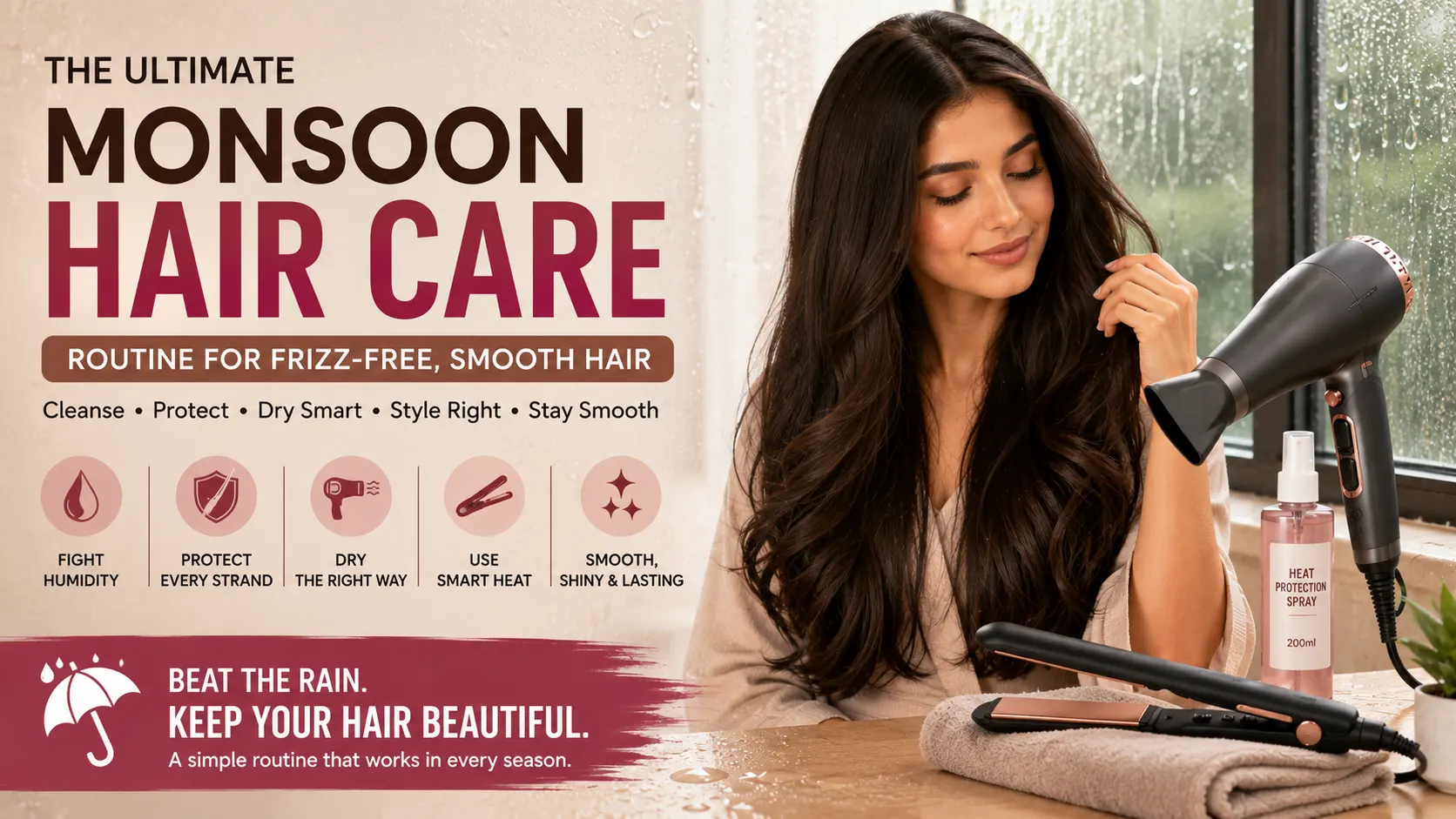
Monsoon weather can make even a carefully planned hairstyle feel unpredictable. Moist air enters a raised hair cuticle, causing strands to swell, lose alignment, and form frizz. Sweat, rain, and repeated washing can add flat roots, tangled ends, and an oily scalp to the problem. The answer is not simply applying more heat or more styling product. A successful monsoon routine balances cleansing, moisture, controlled drying, heat protection, and a finish that can move naturally.
This practical routine is designed for Indian humidity and works for straight, wavy, curly, fine, and thick hair. Adjust the product quantity and temperature for your texture, but keep the order of the steps consistent.
Why Hair Becomes Frizzy During the Monsoon
The outer cuticle of healthy hair lies relatively flat. When hair is dry, porous, chemically treated, or heat damaged, that surface becomes uneven. Humidity then moves into the hair shaft and temporarily changes the hydrogen bonds that control shape. Some sections expand more than others, so straight hair becomes puffy, waves lose definition, and curls develop a fuzzy halo.
Frizz is therefore not a sign that hair needs the highest temperature. Excessive heat may create a smooth result for an hour, but it can remove moisture and make the cuticle more vulnerable later. The better strategy is to prepare the hair well, use efficient tools, and limit repeated passes.
Step 1: Clean the Scalp Without Stripping the Lengths
Wash often enough to remove sweat, pollution, and styling residue from the scalp. Concentrate shampoo at the roots and let the lather rinse through the lengths. Scrubbing the ends can make them rough. Follow with conditioner from the middle of the hair to the tips, where natural oils are less available.
Rinse thoroughly because leftover conditioner may make fine hair collapse in humid weather. Use lukewarm rather than very hot water. A final cool rinse can help the surface feel smoother, although technique and conditioning matter more than water temperature alone.
Step 2: Remove Water Gently
Wet hair stretches easily and is more vulnerable to breakage. Do not rub it with a rough towel. Instead, squeeze out water with your hands, wrap the hair in a microfiber towel or soft cotton T-shirt, and wait several minutes. Detangle from the ends upward with a wide-tooth comb. This simple change reduces knots and short broken hairs around the crown.
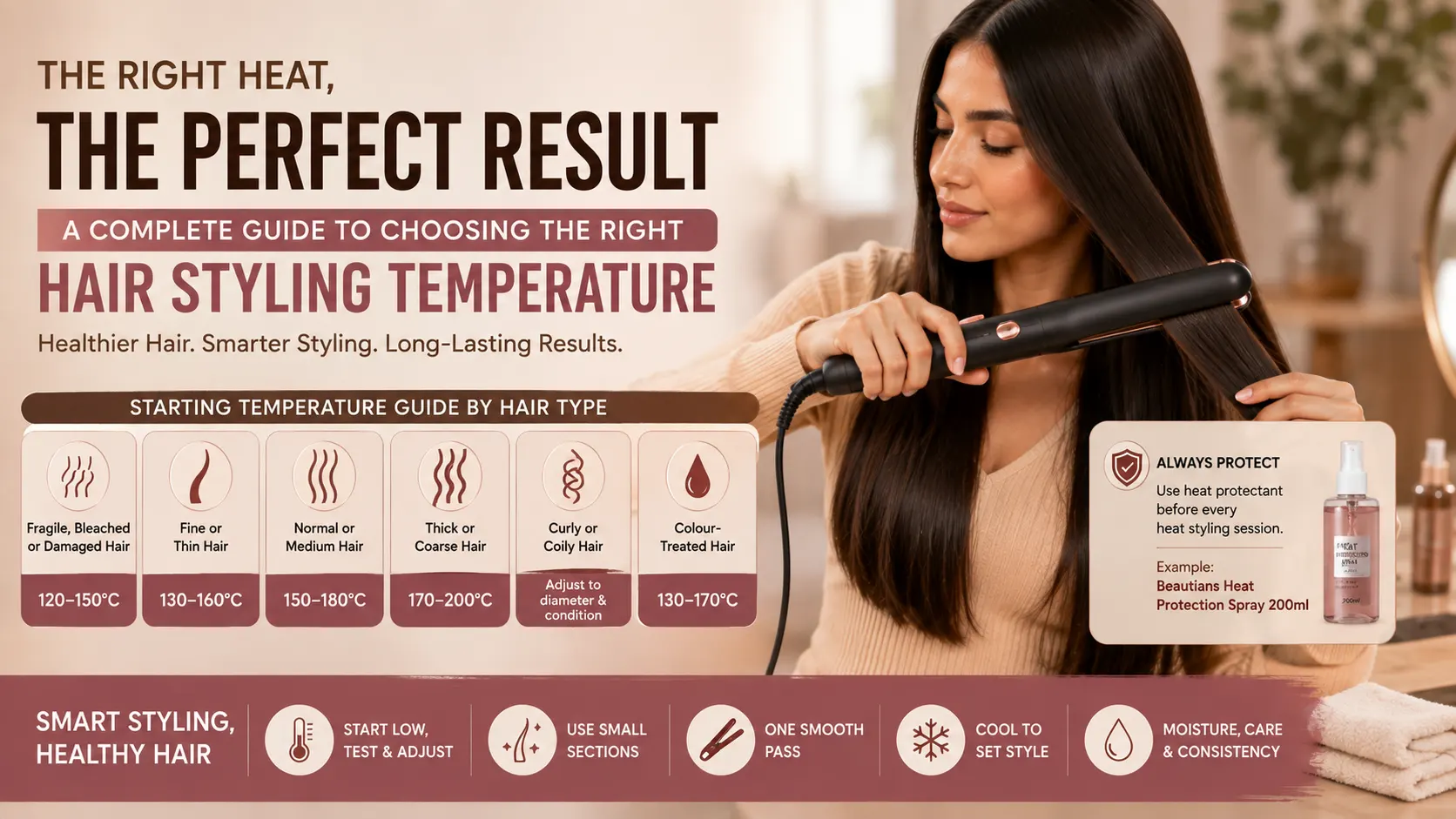
Before blow-drying, mist the lengths evenly with Beautians Heat Protection Spray 200ml. Divide thick or long hair into sections so the spray reaches more than the top layer. Comb through for even distribution and follow the directions on the product label.
Step 3: Choose Controlled Airflow
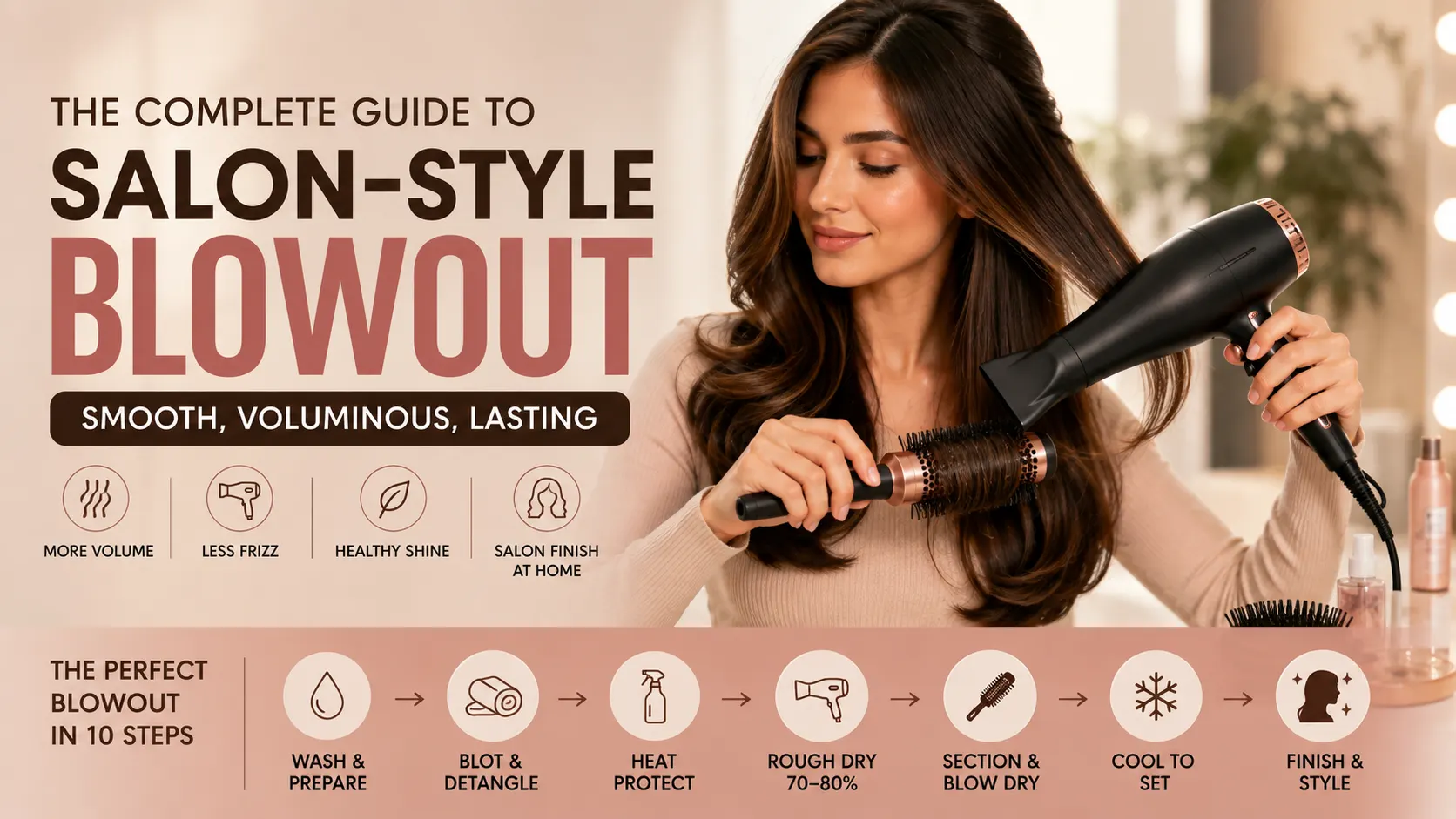
Begin drying when hair is damp rather than dripping. Keep the dryer moving and point airflow from roots toward ends. This direction encourages the cuticle to lie flatter and gives a smoother reflection of light. Hold the dryer at a comfortable distance instead of pressing the nozzle against the hair or scalp.
For daily home styling, the lightweight Beautians Airsculpt Airfinite 1300W Hair Dryer is a practical option for controlled drying. People with very long, dense, or coarse hair may prefer the stronger airflow of the Airsculpt Airfinite 2400W Hair Dryer. Power can shorten the routine, but proper distance, movement, and heat selection still matter.
Dry the roots first because trapped moisture near the scalp can make a finished style collapse. Lift small sections with a brush or fingers, direct air toward the root, and then work through the lengths. Finish each section with cooler air before releasing it. Hair takes its final shape as it cools, so this pause improves hold without another hot pass.
Step 4: Straighten Only Completely Dry Hair
If a sleeker finish is desired, make sure every section is dry. A hot plate on damp hair can turn water into steam inside the strand and cause serious damage. Separate the hair into clean, narrow sections and use the lowest setting that gives an effective result. Move steadily from near the roots to the ends without stopping in one place.
The Sleekron Bluebird Hair Straightener offers adjustable heat and ceramic plates for controlled styling. Fine, bleached, or fragile hair generally needs less heat than thick, healthy hair. One deliberate pass on a manageable section is better than several hurried passes on a large section.
Step 5: Build a Humidity-Ready Finish
Allow the entire head to cool before judging the result. Touching hot hair repeatedly or tying it immediately can create dents and encourage frizz. Once cool, smooth a very small amount of lightweight serum over the ends and outer layer. Avoid applying oil at the roots, especially if the scalp becomes sweaty quickly.
Choose flexible hold rather than soaking the hair with heavy spray. In monsoon weather, too much product can attract buildup and make the style sticky. Keep a wide-tooth comb, soft scrunchie, and small anti-frizz product in your bag for quick corrections. Do not run a straightener over hair that has become damp in rain; let it dry completely first.
Adjust the Routine for Your Hair Type
Fine or Flat Hair
Use conditioner sparingly, keep rich products away from the roots, and dry with gentle root lift. Medium airflow and low to moderate heat are usually sufficient. Stop adding product when the hair feels smooth; more product does not always mean more protection.
Thick or Coarse Hair
Work in smaller sections and focus on complete, even drying. Strong airflow can reduce total styling time. Apply conditioner carefully through the ends and use a controlled temperature rather than jumping directly to the maximum setting.
Wavy or Curly Hair
Preserve the natural pattern by minimizing brushing after the curl begins to form. Scrunch gently, use lower airflow, and avoid touching the hair until it is fully dry. If you choose a smooth blowout instead, maintain consistent tension and direct airflow down the strand.
Habits That Make Monsoon Styling Last
- Sleep on a smooth pillowcase and tie long hair loosely with a soft scrunchie.
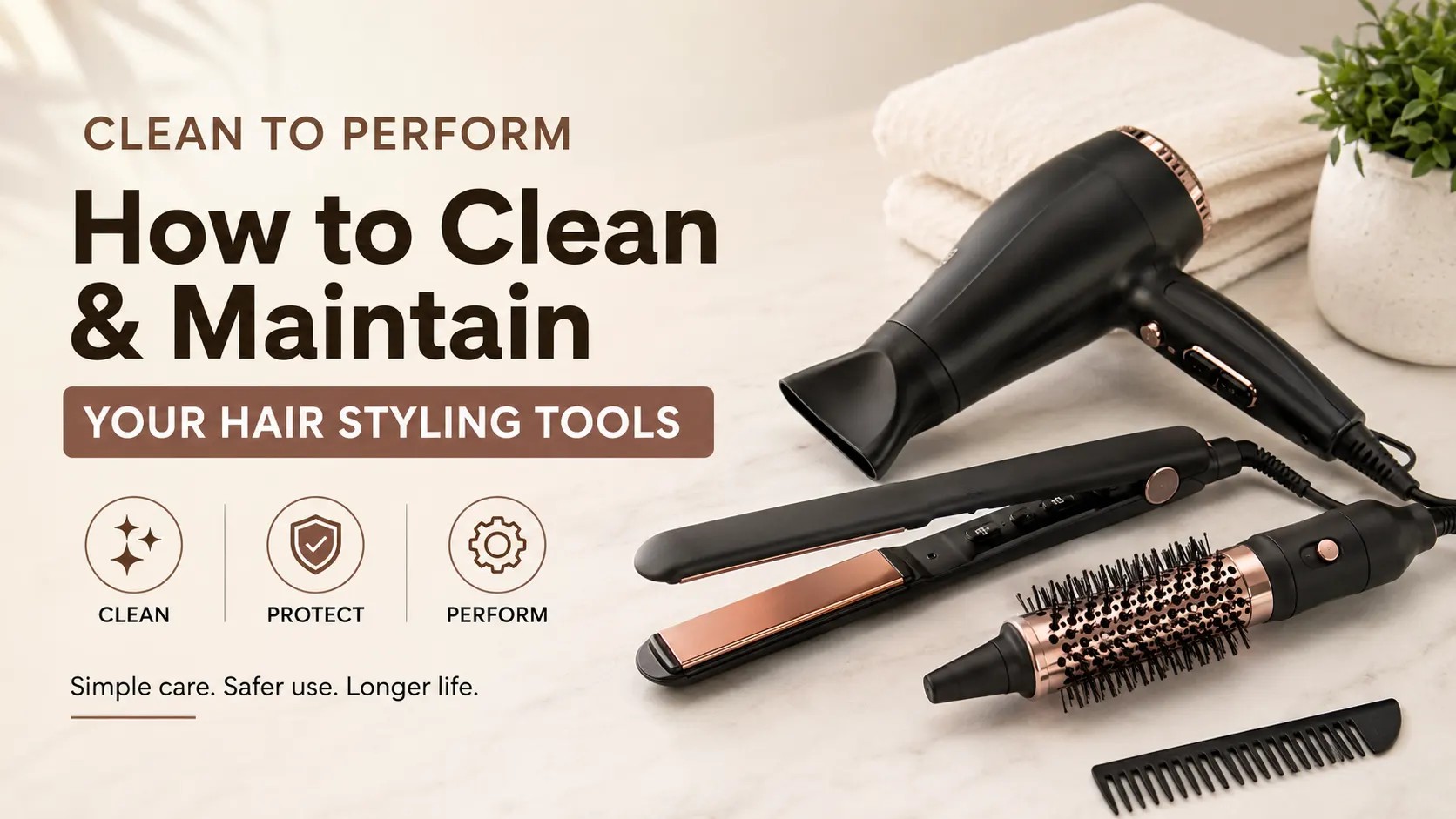
- Clean brushes and tool vents regularly so dust and product residue do not return to clean hair.
- Carry an umbrella or scarf to reduce direct exposure to rain and wind.
- Avoid tight hairstyles on a wet scalp because trapped moisture can feel uncomfortable.
- Schedule trims when split ends begin catching and tangling.
- Give hair occasional no-heat days and use a gentle protective style.
Frequently Asked Questions
Should I straighten my hair every day during the monsoon?
Daily high-heat styling can increase dryness and make future frizz harder to manage. Extend a style with gentle nighttime care, use the lowest effective temperature, and include heat-free days whenever possible.
Why does my blowout become frizzy outside?
The hair may still contain moisture, the cuticle may be porous, or the style may not have cooled before you left. Complete drying, downward airflow, heat protection, and a cool finish can improve durability.
Final Thoughts
Frizz-free monsoon hair comes from controlling moisture, not fighting it with maximum heat. Clean the scalp, condition strategically, blot gently, protect every section, dry in the correct direction, and let the finished shape cool. With a Beautians dryer, a temperature-controlled straightener when needed, and consistent care between washes, hair can remain manageable when humidity rises.