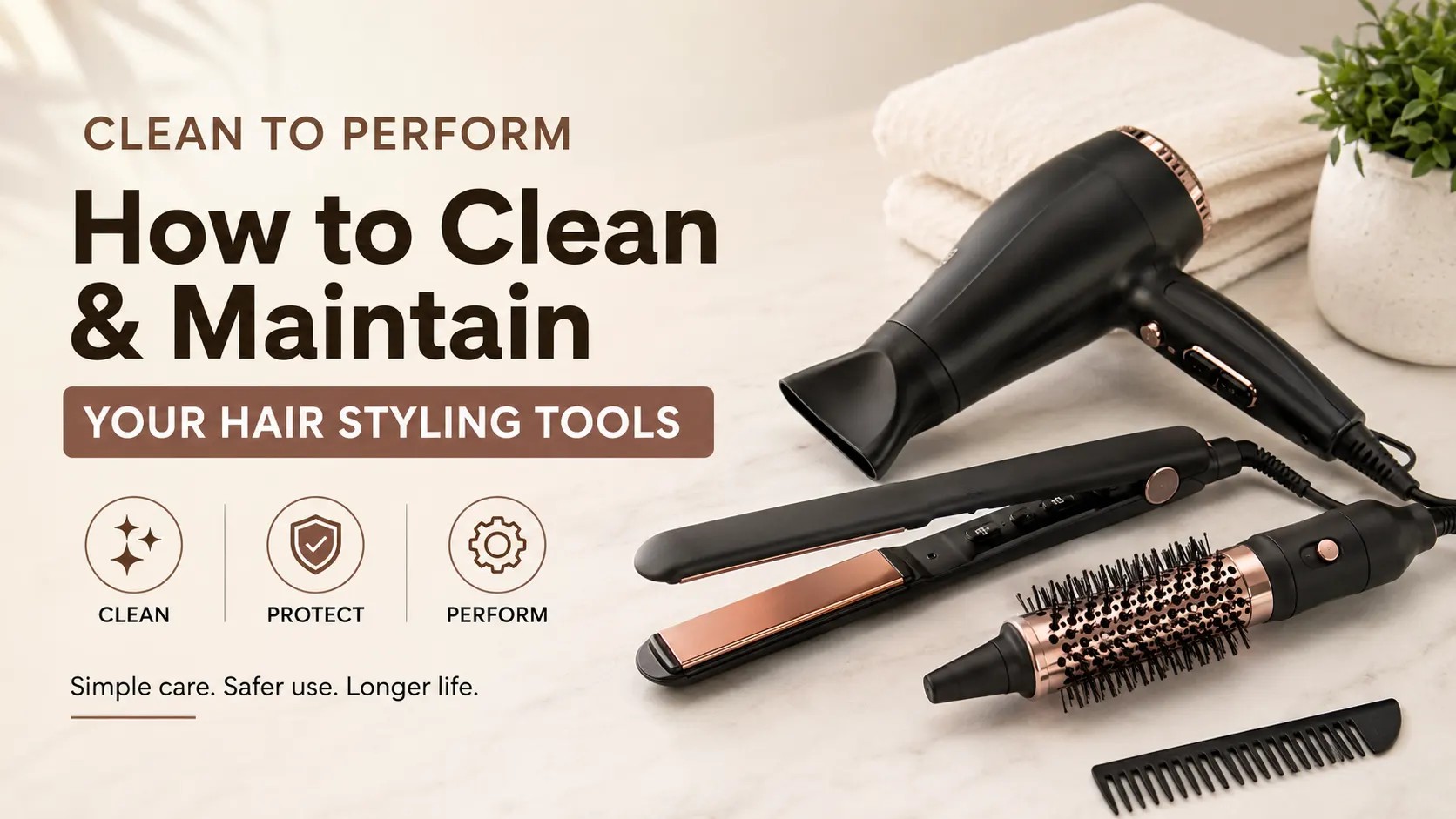
Hair dryers, straighteners, multistylers, brushes, and combs work best when they are clean and properly stored. Dust can restrict a dryer intake, styling residue can make plates drag, and hair trapped in a brush can transfer oil back onto freshly washed strands. Routine maintenance supports consistent performance, safer handling, and a more hygienic beauty routine. It can also help you notice cord damage or loose components before the next styling session.
Cleaning electrical tools requires caution. Always follow the manufacturer manual, switch off and unplug the appliance, and allow it to cool completely. Never immerse an electrical tool in water, rinse it under a tap, or spray liquid directly into openings. When the manual differs from general advice, the manual takes priority.
Build a Simple Maintenance Schedule
A quick check after each use prevents heavy buildup. Remove loose hair, wipe obvious product from safe exterior surfaces, and store the cooled tool properly. Perform a more careful cleaning every few weeks, or sooner if you style frequently or use sprays and serums near heated plates. Salon tools used on several clients require a professional hygiene schedule appropriate to that setting.
Before every use, inspect the plug, cord, body, controls, vents, plates, and attachments. Stop using a tool that has a frayed cord, cracked casing, exposed wire, burning smell, unusual noise, loose plug, or unstable heat. Do not attempt an electrical repair unless you are qualified and authorized to do so. Contact customer support or a suitable service professional.
How to Clean a Hair Straightener
Heat protectant, serum, oil, and dust can form a film on straightener plates. That film may cause snagging, uneven glide, unpleasant odour, or visible marks. Regular gentle cleaning protects the plate surface and makes sectioning technique more consistent.
- Switch off and unplug the straightener.
- Place it open on a heat-resistant surface and let it cool completely.
- Remove loose dust with a clean, dry microfiber cloth.
- If the manual permits, use a barely damp soft cloth to wipe the plates and exterior.
- Use a cotton swab for accessible edges, taking care not to push moisture into seams.
- Wipe again with a dry cloth and leave the tool open until fully dry.
- Check that no fibres remain before the next use.
Do not scrape ceramic or coated plates with a blade, metal tool, abrasive pad, or harsh powder. Scratches can damage the surface and make hair catch. Do not apply cleaner directly to the plates. Avoid cleaning while the tool is hot; rapid temperature change and accidental contact can be dangerous.
Both the Sleekron Bluebird Hair Straightener and Sleekron FX Hair Straightener benefit from clean plates, careful cord storage, and a dry resting place. Consult the model instructions before using any cleaning substance.
How to Clean a Hair Dryer
A dryer pulls air through an intake. Lint, hair, and dust can collect around the filter or grille, reducing airflow and forcing the appliance to work harder. A blocked intake may contribute to overheating or unexpected shutoff. Cleaning frequency depends on the room, storage method, and amount of use.
- Switch off, unplug, and allow the dryer to cool.
- Locate the rear intake or removable filter described in the manual.
- Remove the filter only if the model instructions say it is removable.
- Use a dry soft brush or clean cloth to lift lint from the grille.
- Clean a removable filter exactly as directed and reinstall it only when completely dry.
- Wipe the exterior and nozzle with a dry or barely damp cloth, keeping moisture away from openings.
- Confirm that every component is secure before use.
Never insert pins, comb tails, or metal objects through the grille. Do not operate the dryer without its required filter. Keep the intake away from loose hair and fabric during styling, and never use a dryer near a bath, sink, or standing water.
Whether you use the compact Beautians Airsculpt Airfinite 1300W Hair Dryer or the powerful Airsculpt Airfinite 2400W Hair Dryer, unrestricted airflow is essential. A few minutes of regular intake care is better than waiting until performance drops.
How to Clean Multistyler Attachments
A multistyler contains different surfaces and connection points, so attachment safety is especially important. Turn the appliance off, unplug it, and let every part cool. Remove an attachment only according to the manual. Wipe accessible styling surfaces with a soft cloth and keep liquid away from electrical contacts or connection sockets.
Inspect the Permperfect Multistyler 4-in-1 Hair Styler attachments for residue before fitting them. Do not force an attachment, and never operate the tool when a component feels loose. Store parts together in a dry organizer only after they are completely cool and clean.
Store Cords Without Damage
A tight cord wrapped around a hot appliance may bend conductors and strain the point where the cord enters the body. After unplugging and cooling, gather the cord in loose loops. Use the supplied tie if available, but do not pull it tight. Hold the plug when disconnecting; never yank the cord from the wall.
Keep tools in a dry drawer, cabinet, or heat-safe organizer away from children and pets. Do not store them beside a sink or in a humid bathroom if moisture can collect. Avoid placing heavy objects on cords or plate surfaces. Keep attachments where their coatings will not be scratched by metal clips.
Warning Signs That Need Professional Attention
- The appliance sparks, smokes, or smells burnt.
- The cord or plug becomes unusually hot.
- The casing is cracked or a wire is visible.
- The dryer makes a new grinding or rattling sound.
- Heat cuts in and out unexpectedly.
- A straightener plate is loose, chipped, or misaligned.
- An attachment no longer locks securely.
- The tool trips the electrical supply repeatedly.
Stop use immediately, unplug only when it is safe, and seek authorized support. Cleaning cannot fix an electrical fault, and continuing to test a damaged tool can increase risk.
Common Cleaning Mistakes
Immersing tools, spraying cleaner directly onto electrical parts, using abrasive pads, scraping coated plates, reassembling damp components, and pulling lint with metal objects are unsafe or damaging habits. Another mistake is testing the tool before it has dried fully. Plan cleaning after styling rather than just before, giving every surface plenty of time to dry.
Frequently Asked Questions
How often should I clean styling tools?
Remove loose hair and check surfaces after each use. Schedule deeper cleaning every few weeks, adjusted for frequency and product buildup. Clean a dryer intake sooner when visible lint appears or airflow changes.
Can I use alcohol or household cleaner on plates?
Use only substances permitted by the manufacturer. Coatings, plastics, printing, and adhesives react differently, so a general household cleaner may cause damage. Apply any approved cleaner to a cloth, never directly to the appliance.
Final Thoughts
Tool maintenance is a small habit with a visible payoff. Clean plates glide more smoothly, clear dryer intakes support steady airflow, and tidy attachments are easier to fit and store. Unplug first, cool completely, keep moisture away from electrical openings, and use only manufacturer-approved methods. Combine that routine with loose cord storage and a quick safety inspection before each session, and your Beautians styling tools will be better prepared to deliver consistent everyday results at home.