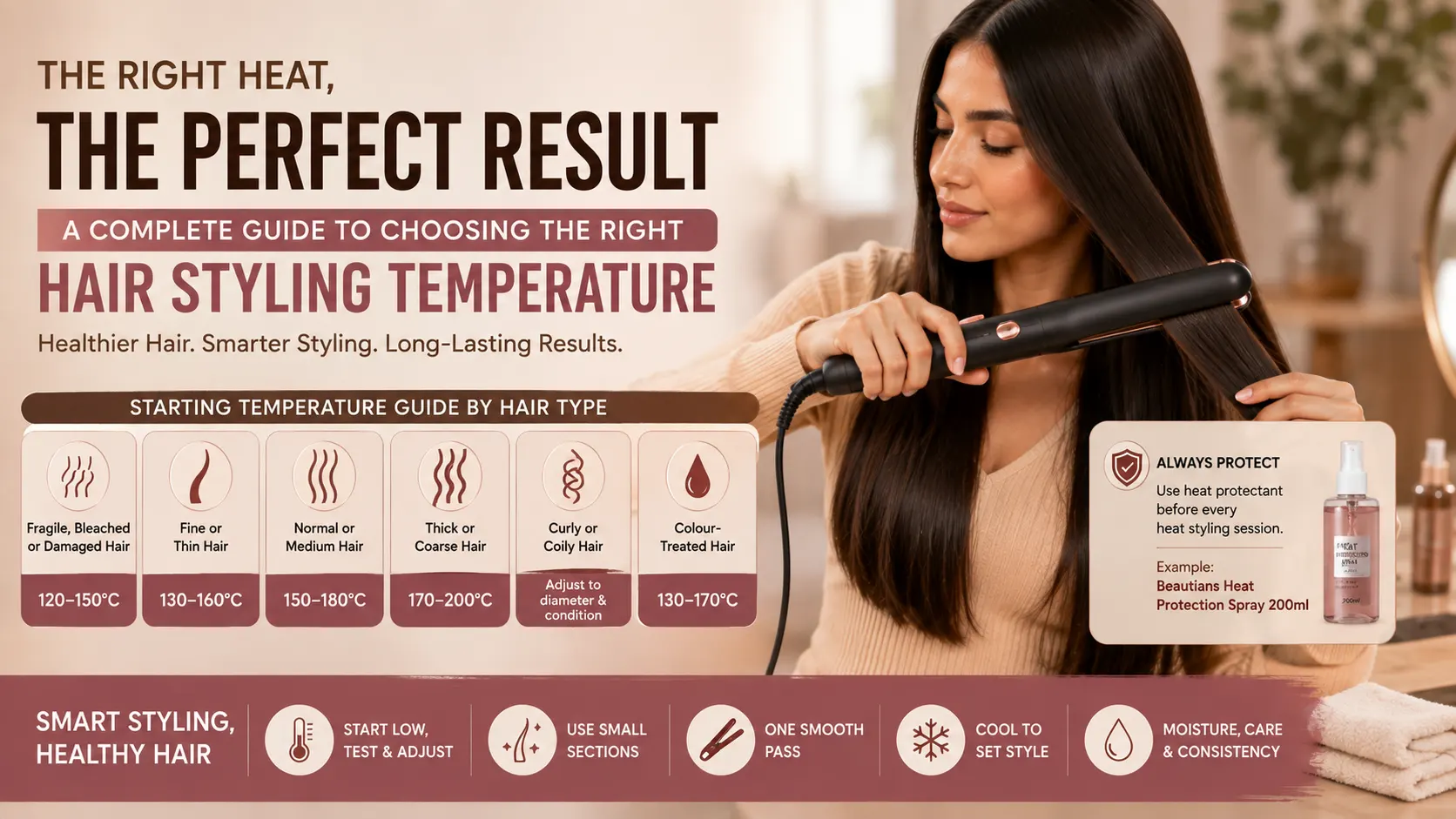
Temperature is one of the most important decisions in heat styling, yet many people treat the maximum setting as the default. A hotter tool may appear to work faster, but unnecessary heat can remove moisture, weaken proteins, fade colour, and make hair increasingly difficult to manage. The best temperature is not the highest number on the display. It is the lowest setting that creates the desired result with a smooth, controlled pass.
This guide explains how to choose a sensible starting range for fine, normal, thick, curly, colour-treated, and damaged hair. The ranges are practical guidelines rather than medical rules. Styling speed and product buildup affect the amount of heat reaching the strand.
What Heat Does to Hair
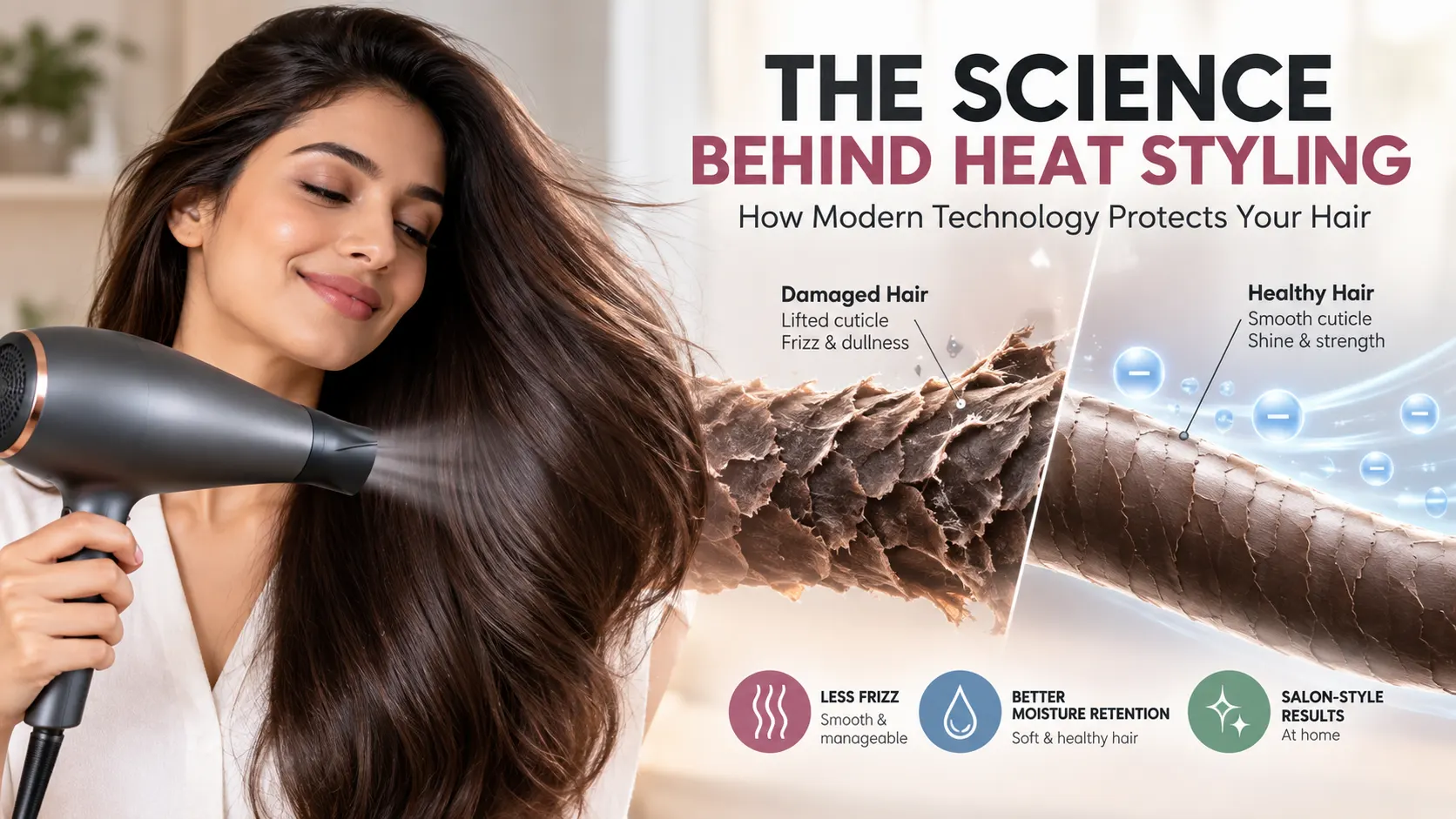
Heat temporarily changes hydrogen bonds inside the cortex, allowing straighteners and stylers to reshape hair. Controlled heat can create a sleek finish, waves, curls, or volume. Excessive heat, however, can lift and crack the cuticle, evaporate internal moisture, reduce elasticity, and degrade keratin. Damage is cumulative, so a strand may look acceptable after one hot session while becoming rougher over repeated use.
Always Prepare Before Choosing a Setting
Start with clean, detangled, completely dry hair when using a straightener or heated multistyler. Oil, dry shampoo, and styling residue can alter how the plates move and how heat is transferred. Never clamp a flat iron over wet or damp hair. Water trapped inside can turn rapidly to steam and create weak points within the strand.
Apply Beautians Heat Protection Spray 200ml evenly and follow its directions. Section the hair instead of spraying only the visible surface. Give the product time to settle or dry before a heated plate is applied. Heat protection reduces risk but does not make unlimited temperature safe.
Suggested Starting Temperatures by Hair Type
Fragile, Bleached, or Visibly Damaged Hair: About 120-150 C
Hair with breakage, repeated bleaching, severe dryness, or poor elasticity needs the most caution. Begin near the low end and test one hidden section. If the strand does not respond, increase the temperature only in a small step. Severely compromised hair may benefit from avoiding hot tools until its condition is assessed and weak ends are trimmed.
Use narrow sections and a steady movement, but do not repeatedly press the same fragile area. A smooth low-temperature result is more valuable than perfectly rigid straightness that increases breakage.
Fine or Thin Hair: About 130-160 C
Fine strands have a smaller diameter and can heat quickly. Start low, especially when hair is naturally straight or only needs flyaway control. Use light tension and avoid slowing down at the ends, which are usually the oldest and driest part. Fine hair may also lose volume when over-straightened, so focus the tool where correction is actually needed.
Normal or Medium Hair: About 150-180 C
Healthy medium-textured hair often responds within this middle range. Begin around 150 C and increase only if a well-prepared, narrow section requires it. The goal is one consistent pass, not maximum heat. If the roots are smooth but the ends are dry, reduce the setting or release pressure earlier near the tips.
Thick or Coarse Hair: About 170-200 C
Thicker strands may require more energy to reshape, but thickness does not automatically mean damage resistance. Start below the top of the range and work with smaller sections. Good sectioning, plate contact, and tension often solve the problem that people try to fix by turning the temperature to maximum.
The Sleekron FX Hair Straightener provides smooth ceramic styling and adjustable control for different routines. Choose the setting after evaluating strand thickness and condition, not simply the overall amount of hair.
Curly or Coily Hair: Condition Matters More Than Pattern
Curl type alone does not determine temperature. A fine curl can be delicate, while a coarse curl may tolerate a higher effective setting. Begin according to strand diameter and condition. Stretch and dry the section smoothly before straightening so the iron does not have to do all the work. Smaller sections and steady tension help preserve the result with less heat.
Colour-Treated Hair: Usually 130-170 C
Colour and chemical services can increase porosity and sensitivity. High heat may accelerate fading and dryness, particularly on lightened hair. Start low, watch how the hair responds, and protect the ends. Ask the professional who performed the service about any specific waiting period or aftercare instructions.
How to Find Your Lowest Effective Temperature
- Dry and detangle the hair completely.
- Apply heat protectant evenly and allow it to settle.
- Choose a hidden section about one to two inches wide.
- Start at the lower end of the relevant range.
- Glide once at a steady pace without stopping.
- Let the section cool and assess smoothness, shine, and flexibility.
- Increase by a small amount only when the first test is ineffective.
Once you find a suitable setting, record it for future use. Reassess after colouring, bleaching, illness, seasonal dryness, or any visible change in hair condition. The right number today may not be right after a chemical service.
Temperature Is Only Part of Safe Styling
Section Size
A section that is too thick receives uneven heat. The outer hairs touch the plates while the inner hairs barely respond, encouraging repeat passes. Smaller, tidy sections improve contact and can make a moderate setting more effective.
Tool Movement
Never pause with hot plates clamped on one point. Move smoothly and avoid crushing the hair with excessive pressure. For curls made with a flat iron, maintain a consistent rotation and speed so one area does not receive prolonged heat.
Plate Quality and Control
Uneven plates and unstable heat can create hotspots. A controlled tool such as the Sleekron Bluebird Hair Straightener, with adjustable settings and ceramic plates, makes it easier to match the routine to the hair instead of using a single fixed temperature.
Common Temperature Mistakes
- Starting at maximum heat: This removes the opportunity to find a lower effective setting.
- Styling damp hair: Heated plates should be used only on completely dry hair.
- Making many fast passes: One prepared, controlled pass is usually kinder and more effective.
- Using the same heat on every family member: Fine, bleached, coarse, and healthy hair have different needs.
- Ignoring the ends: Older ends often require less heat and gentler handling.
- Trusting heat protectant as a shield against everything: Protection supports good technique; it does not replace it.
Frequently Asked Questions
Is 230 C safe for all hair?
No. That temperature can be excessive for many people, especially those with fine, bleached, coloured, dry, or damaged hair. Use the lowest effective setting and do not exceed the instructions for the tool or styling product.
Why does my hair need several passes?
The section may be too large, the hair may not be fully dry, the plates may have residue, or the movement may be inconsistent. Correct those issues before increasing heat.
Final Thoughts
Safe heat styling begins with observation. Identify the strand diameter and current condition, prepare the hair completely, start low, and test a hidden section. Adjustable Beautians straighteners and an even application of heat protection make controlled styling easier, but technique remains essential. When the lowest effective temperature is combined, hair can hold a polished shape while retaining more softness, shine, and strength.